
Foreign investors continued their relentless selling in the Indian equity markets in August, offloading shares worth Rs 21,201 crore due to the unwinding of the yen carry trade, recession fears in the US and ongoing geopolitical conflicts. This came after an inflow of Rs 32,365 crore in July and Rs 26,565 crore in June, data with the depositories showed.

From the Sensex firms, Adani Ports, Eternal, Bajaj Finance, Axis Bank, Bajaj Finserv, Reliance Industries, Power Grid and NTPC were the major gainers. Sun Pharma, however, tanked over 5 per cent.

The recent stimulus measures announced by China have seen most analysts sit up and take notice.

The initial public offering of non-banking financial company Tata Capital Ltd got fully subscribed on the final day of bidding on Wednesday. The company's Rs 15,512 crore share sale received bids for 45,84,78,044 shares against 33,34,36,996 shares on offer, translating into 1.38 times subscription, according to NSE data till 13:36 hours.

You don't need a six-figure salary to build wealth -- you need discipline and a smart plan, says Ramalingam Kalirajan. and shows you how

Macroeconomic data announcements, trading activity of foreign investors and global trends will guide equity market movement this week, which would also mark the beginning of the new calendar year and month, analysts said.

The RBI advisory follows a labour ministry request earlier this year seeking the central bank's expertise to identify gaps in EPFO's investment strategy and fund management practices, including accounting, risk management, and internal governance.

From the Sensex firms, Infosys declined by 3.54 per cent. Power Grid, Eternal, HCL Tech, Tata Consultancy Services, Bharti Airtel, IndusInd Bank, NTPC and HDFC Bank were the major laggards. Sun Pharma, Adani Ports, Bajaj Finance, State Bank of India and Tech Mahindra were the gainers.

Multiple tailwinds for the automobile sector, including a cut in goods and services tax (GST) rates, are keeping analysts bullish on auto stocks from a long-term perspective, even as they see the rally running its course in the near term.

The only matter for speculation is if the markets will make a new high before turning down or simply slip unceremoniously anytime now, says Sonali Ranade

Among Sensex firms, Tata Steel, HCL Tech, UltraTech Cement, Bharat Electronics, Sun Pharma and Tata Consultancy Services were the major gainers. However, Axis Bank, Titan, Maruti and Tata Motors were among the laggards.

Among Sensex firms, Tata Steel jumped the most by 5.90 per cent. Titan, Mahindra & Mahindra, ITC, Eternal, State Bank of India, and Trent were among the other gainers. However, Infosys, NTPC, Hindustan Unilever, TCS, Adani Ports and Bharti Airtel were among the laggards.

Macroeconomic data announcements, global trends and trading activity of foreign investors would be the major driving factors for the equity markets this week, according to analysts.

India's mergers and acquisitions (M&A) activity cooled in the second quarter of 2025-26 (Q2FY26), with deal value falling to $26.26 billion from $29.04 billion a year ago, according to Bloomberg data.
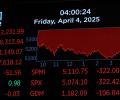
'If the US stagnates and falls into a recession, the dollar will weaken, oil prices will also dip. This augurs well for India.'

The ongoing fourth quarter earnings season, global factors and macroeconomic data would guide the trends in the equity markets this week, analysts said. Markets would also take cues from trading activity of foreign investors, rupee-dollar trend and movement of global oil benchmark Brent crude. "Domestically, the next batch of Q4 earnings reports will drive stock-specific movements, Hero MotoCorp, Larsen & Toubro, BPCL, State Bank of India, Eicher Motors and Tata Motors are some of the big names in the list and the next phase of voting," said Pravesh Gour, senior technical analyst, Swastika Investmart Ltd.

Colgate-Palmolive India's September quarter (Q2FY26) performance has reinforced concerns among brokerages about the company's continued market challenges.
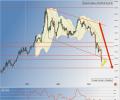
If the dollar continues to rally as expected, commodities will continue to tank after a short counter-trend rally.The same holds true for precious metals, says Sonali Ranade

While the economy will wait for a rate cut in December, the banking industry should be happy with the wave of liberalisation -- a big push for growth in bank credit, points out Tamal Bandyopadhyay.

Among Sensex firms, Eternal, Sun Pharma, Infosys, HDFC Bank, HCL Tech, Hindustan Unilever, Power Grid, ITC and Adani Ports were the major gainers. However, Tata Motors, Trent, Bajaj Finance and Asian Paints were among the laggards.

Jio Platforms Limited is likely to have a valuation of $148 billion by the time it goes public on the back of strong free cash flow and potential deleveraging, ICICI Securities said.

tailwinds of a remarkable year and handsome investor returns, Indian equities are set for an eventful journey in 2024, with a slew of local and global cues -- varying from interest rates to Lok Sabha polls to geopolitical happenings. Analysts are of the view that the bull run in the domestic equity market will continue, and over the next 3-6 months, the benchmark indices -- Sensex and Nifty -- could climb up to 7 per cent. In 2023, the 30-share BSE Sensex jumped 11,399.52 points or 18.73 per cent, and the NSE Nifty climbed 3,626.1 points or 20 per cent.

Since November 2022, sectoral, midcap, and smallcap funds have collectively added nearly 39 million folios, which is 65 per cent of the total additions to equity funds over the past two years.

The sector's IPO pipeline is led by Tata Capital's Rs 17,000 crore issue, followed by ICICI Prudential Asset Management at Rs 10,200 crore and Billionbrains Garage Ventures at Rs 6,000 crore.

Real estate firm Godrej Properties' profit (attributable to the equity holders of the parent) for the second quarter of FY26 grew 21 per cent year-on-year (YoY) to Rs 405.1 crore, beating analysts' estimates. The Bloomberg analysts' poll had pegged the profit at around Rs 349.4 crore.

After two weeks of buying, FPIs turned net sellers in Indian equities this week, with a net withdrawal of Rs 976 crore amid a strengthening US dollar and steady rise in US 10-year bond yields, impacting investor sentiment. Foreign Portfolio Investors (FPIs) began the week on a positive note, investing Rs 3,126 crore in equities during the first two trading sessions (December 16-20).

From the Sensex firms, Kotak Mahindra Bank, Eternal, Asian Paints, NTPC, Bharat Electronics Ltd, Adani Ports, Infosys and State Bank of India were among the major gainers. However, Titan tumbled over 6 per cent. Trent, Axis Bank, Maruti and Hindustan Unilever were also among the laggards.

Telecom firm Bharti Airtel will approach the government on the adjusted gross revenue (AGR) it has to pay the exchequer following the Supreme Court's judgment that the government can reassess all AGR dues, according to vice-chairman and managing director Gopal Vittal.

'Investors should continue with their SIPs, especially during market corrections.' 'For those looking to start new SIPs, beginning with large-cap funds is a prudent strategy, followed by flexi-cap and value-oriented approaches.'

'For most investors, I recommend a low double-digit allocation (10 to 12 per cent) to gold and silver combined.'

The Reserve Bank of India (RBI) on Wednesday met the long-standing demand of banks by allowing them to finance acquisitions by Indian companies, a move that also expands banks' capital market lending in the country.

Domestic institutional investors (DIIs) poured in Rs 94,829 crore of fresh money into Indian equities in August, the second-highest monthly inflow after record Rs 1.07 trillion influx in October 2024.

India's housing market has remained resilient this festival season (Dussehra-Diwali period), despite global macroeconomic challenges, tech-sector layoffs, and affordability pressures, with developers reporting 10-25 per cent year-on-year (Y-o-Y) rise in home sales across major cities.
The Reserve Bank of India's (RBI's) interest rate decision, West Asia conflict and trading activity of foreign investors are the key factors that will dictate investors' sentiment in the market this week, analysts said. Moreover, quarterly earnings from IT bellwether TCS, domestic macroeconomic data and movement in global oil benchmark Brent crude would also guide trends in the market. Worsening tensions in the Middle East and foreign fund outflows were the major culprits behind the equity markets sharp fall last week.

Among Sensex firms, ITC, Bharti Airtel, Trent, Bajaj Finserv, Titan and Reliance Industries were the major laggards. However, UltraTech Cement, Adani Ports, Tata Motors, Bharat Electronics, Bajaj Finance and Hindustan Unilever were among the major gainers.

'Indian markets may underperform global peers for the next two quarters.' 'But beyond that, India should catch up and resume its long-term growth path.'

Do home prices really never fall? Ramalingam Kalirajan begs to differ.

'As long as Sebi maintains transparency and market stability, the Jane Street episode is unlikely to deter long-term foreign capital.'

When we talk about Exchange-Traded Funds (ETFs), a few of their features that strike our mind are their low cost, easy-to-understand composition, and simple trading. While Index ETFs have always been popular among investors, Gold ETFs have garnered interest in recent years due to gold prices fluctuating near their all-time highs. But from a long-term investing context, do these ETFs really deliver?

Part-I of this three-part series dives into Delhi-NCR's SPR, Sohna, Dwarka Expressway, and Jewar Airport leading the charge.
 © 2026 Rediff.com - Advertise with us - Disclaimer - Privacy Policy - Sitemap - Feedback - About us - Terms of use - Grievances